
A slab leak is a leak in a water line that runs under or through the concrete foundation. It is out of sight, so people first notice the water bill, a warm patch on the floor or a faint sound of running water at night. When the leak is active and water is surfacing, it is an emergency, and our 24/7 line is open for it.
Slab leak repair in Sachse, TX starts by confirming the leak and its location, then offering repair options that fit your house. Until the plumber arrives, shut off the main water valve to stop the loss.
Slab leak emergency: what to do first
Shut off the main valve
This stops the water feeding the leak. Test a faucet to confirm the flow has stopped.
Turn off the water heater
If the leak is on the hot line, shut off power or gas to the heater so it does not run dry.
Move belongings
Lift rugs and boxes off wet floors, and keep furniture off damp carpet.
Look for new cracks
Photograph any cracks, wet flooring or warm spots so the plumber can compare them.
Signs of a slab leak
A warm spot on the floor
A leaking hot water line heats the concrete above it.
Running water sound with fixtures off
A hiss or trickle in a quiet house suggests water moving under pressure.
A sudden high bill or a spinning meter
The meter moves when every fixture is off.
Wet carpet, damp baseboards or a musty smell
Water that reaches the surface wets finishes and invites mold.
Why slab leaks happen in the Dallas area
The soil under much of the Dallas area is expansive clay, the kind the Dallas County Master Gardeners describe as swelling and shrinking with moisture. As the soil moves, a slab can shift a little, and the pipes inside or below it rub, bend and wear.
Water chemistry, pipe age and rubbing against gravel or concrete add to it. A leak makes the problem worse, because extra water under a house moves the soil even more.
How a slab leak is confirmed
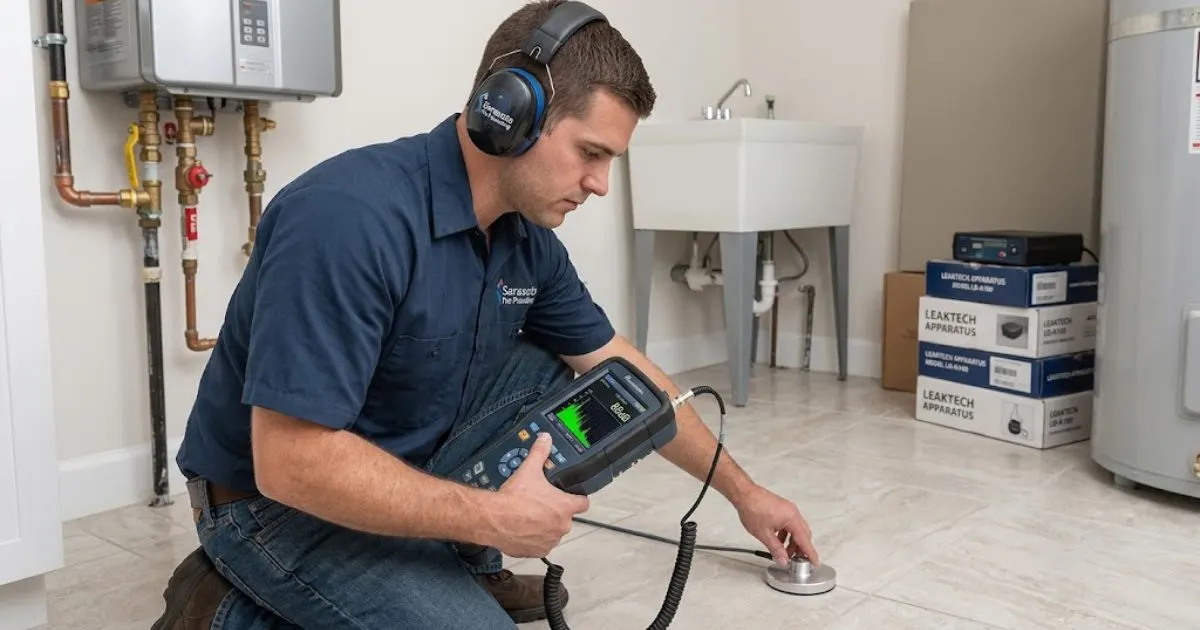
The plumber closes the fixtures and checks the meter, isolates sections of the supply line with pressure tests and listens with acoustic equipment. A thermal imaging camera can show a hot water leak as a warm area on the floor. The goal is to find the spot within a small area before any concrete is cut. Our leak detection page covers these tools in more detail.
Repair options
| Option | How it works | Think about |
|---|---|---|
| Spot repair through the slab | Break the concrete above the leak and replace the pipe section | Direct and quick, but the floor needs patching |
| Reroute through the attic or walls | Abandon the leaking line and run a new one overhead | Avoids the slab, opens walls and ceilings |
| Repipe the house | Replace the supply system, see repiping | Best when several leaks or old pipe point to a system problem |
| Epoxy pipe coating | Coat the inside of the pipe | Not suited to every pipe or leak, ask the plumber if it applies |
Living with a slab leak while you decide
Many homeowners shut off the main valve at night and run the water by day until a repair is scheduled. That reduces loss and limits damage while you choose between options. Do not ignore a slab leak. The water can soften the soil under the foundation and the bill keeps rising.
Need a slab leak confirmed?
Call the 24/7 line and describe the signs you have noticed.
Slab leaks and Sachse homes
In Sachse, a home built on a slab can sit anywhere from Heritage Park to Jackson Meadows, and a leak anywhere under it can behave the same way. If you also see cracks in drywall or brick, or a door that began to stick, mention it on the call. Foundation movement is a separate trade, and a plumber can tell you whether the pipe or the foundation should be called first.
Slab leaks in nearby towns
Slab leak calls from Garland and Wylie are handled by the same team.
What slab leak repair costs
Cost factors for a slab leak repair
A fair price follows a confirmed diagnosis. You should know the repair path and the price before concrete is cut.
Some homeowner policies cover sudden slab leak damage and the access to repair it, and others do not, so read yours and document the damage. Want your real number? Call (972) 903-8224.
Common questions
Do you handle slab leak emergencies at night or on weekends in Sachse?
Yes. The 24/7 line takes calls at any hour. Shut off the main water valve first, then call and describe what you see, and the plumber is booked for the earliest available slot.
How do I know it is a slab leak and not a pipe leak elsewhere?
A warm floor spot, a running sound with fixtures off and a meter that moves are strong clues. The plumber confirms with a pressure test and acoustic tools.
Does a slab leak mean my foundation is damaged?
Not by itself. A long-running leak can soften the soil and contribute to movement, which is why prompt repair matters. A structural engineer can judge the foundation.
Will you have to break my floor?
Only if a spot repair is the chosen path. Rerouting through the attic avoids the slab, and the plumber explains the trade-offs before work starts.
Can a slab leak fix itself?
No. Leaks grow. Delaying repair increases the water loss and the damage.