
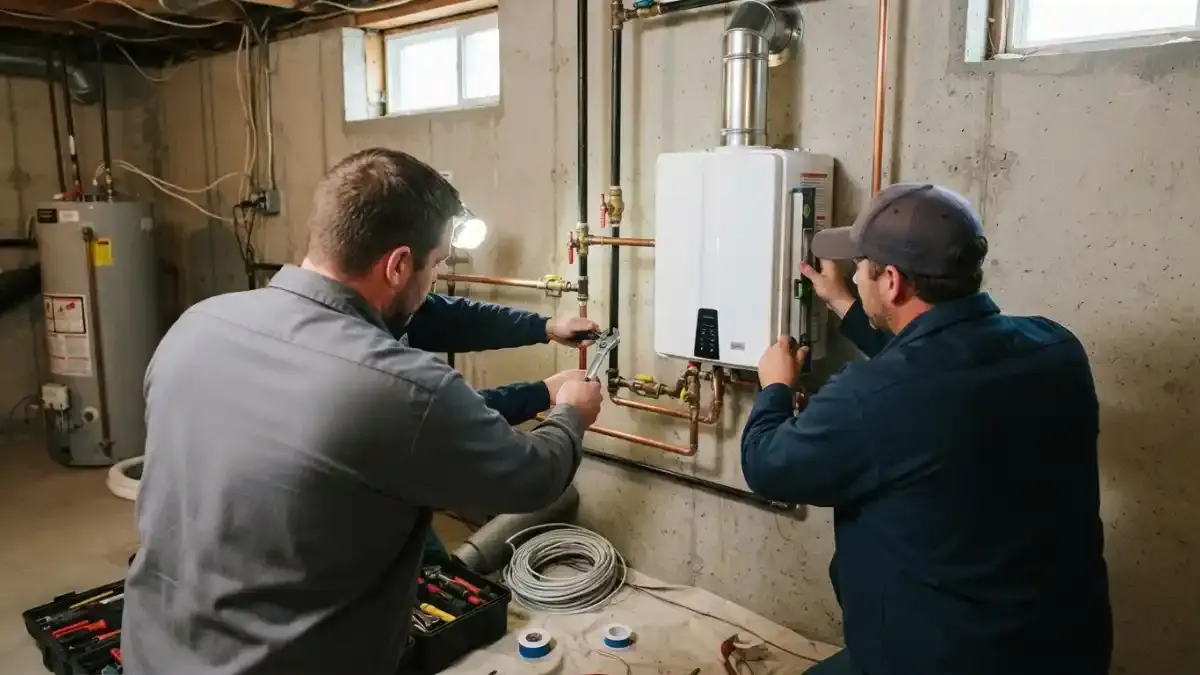
A tank water heater keeps 40 to 80 gallons hot all day and night, whether or not anyone is home. A tankless heater heats water only when a hot tap is on. That is the source of the efficiency claim, and it is true as far as it goes. How much you save depends on how much hot water your household uses.
This guide explains where the savings come from, where they do not and what to check before you buy for a Sachse home.
Where tankless saves energy
A tank loses a little heat through its walls all day. This standby loss goes away with a tankless unit, because nothing is stored. Households that use little hot water, with one or two people in the house, save the most. Their tank would sit hot for hours with nothing drawn from it.
Where the savings shrink
- A large household that runs hot water most of the day
- A tankless unit that is oversized and cycles often
- A home where the gas line must be upgraded to feed the unit
- Scale in the heat exchanger that is never flushed
In a busy household, the tank is emptied and reheated over and over, and the standby loss is a small part of the total. Savings in that case are small.
Gas or electric tankless
| Type | What it needs | Watch for |
|---|---|---|
| Gas tankless | A larger gas line and a venting system | Gas line sizing and vent routing |
| Electric tankless | A high-amperage circuit | Panel capacity and wire size |
The unit is only part of the project. The gas line, the venting and the electrical service can each add cost, and a plumber should check them on a visit before quoting.
Sizing: flow rate and temperature rise
Tankless units are sized by how many gallons per minute they can heat and by how much they raise the water temperature. A shower uses a certain flow and a washing machine uses another. If the unit is too small, the temperature drops when two fixtures run at the same time. A plumber adds up your peak use and picks a unit to match.
Maintenance matters
Minerals build up inside the heat exchanger, and scale cuts efficiency. Most makers call for a flush on a regular cycle, and in hard water areas the cycle should be shorter. Skipping it lowers efficiency and can shorten the life of the unit.
Tankless heaters and Sachse water
The North Texas Municipal Water District describes the water it supplies to Sachse as moderately hard. Moderately hard water leaves scale in a heat exchanger, so a tankless unit in a Sachse home should be flushed on the schedule the manufacturer gives, and a softener may be worth considering. Our softener and filtration page explains how it works.
Hardness at your own tap can differ, so test your tap or ask your utility.
Is tankless right for you
Choose a tankless unit if you want to free up the floor space, you use modest hot water or you plan to stay in the house long enough to recover the extra cost. Stay with a tank if your household uses a lot of hot water at once, if the gas or electric upgrades are expensive or if you want the lowest first cost. Our tankless page covers installation, and the water heater installation page covers tank options.
Households in Wylie and Murphy ask the same question, because many newer homes there have room for either type.
Questions to ask before you buy
- What flow rate does the unit deliver at the temperature rise I need?
- Does the gas line or the electrical panel need an upgrade, and what does it cost?
- Where will the vent go, and does it meet the maker rules?
- What is the flush schedule, and who performs it?
- What is the warranty on the heat exchanger?
A plumber who can answer all five from a visit to your home, not from a catalog, is a good sign.
Cost over time
The extra cost of a tankless unit is real, and the energy savings come slowly. Many households do not save enough to pay back the difference in a short time. The longer service life and the freed floor space can still justify it. Ask your plumber to put the numbers for your home on paper, and compare them with a tank unit of the same quality.
Want to compare tank and tankless?
Call and describe your household and the heater you have now.
Common questions
Do tankless water heaters really save energy?
They remove standby loss. Savings are largest in small households and smaller in households that use a lot of hot water.
Does a tankless unit give unlimited hot water?
It heats continuously, but its flow is limited, so too many fixtures at once can drop the temperature.
Do tankless heaters need maintenance?
Yes. They should be flushed for scale on the maker schedule, especially in hard water.
Does hard water in Sachse affect a tankless heater?
Moderately hard water leaves scale in the heat exchanger. Flush it regularly and consider a softener.
Do I need to upgrade my gas line for tankless?
Often. A plumber checks line size and venting before quoting.