
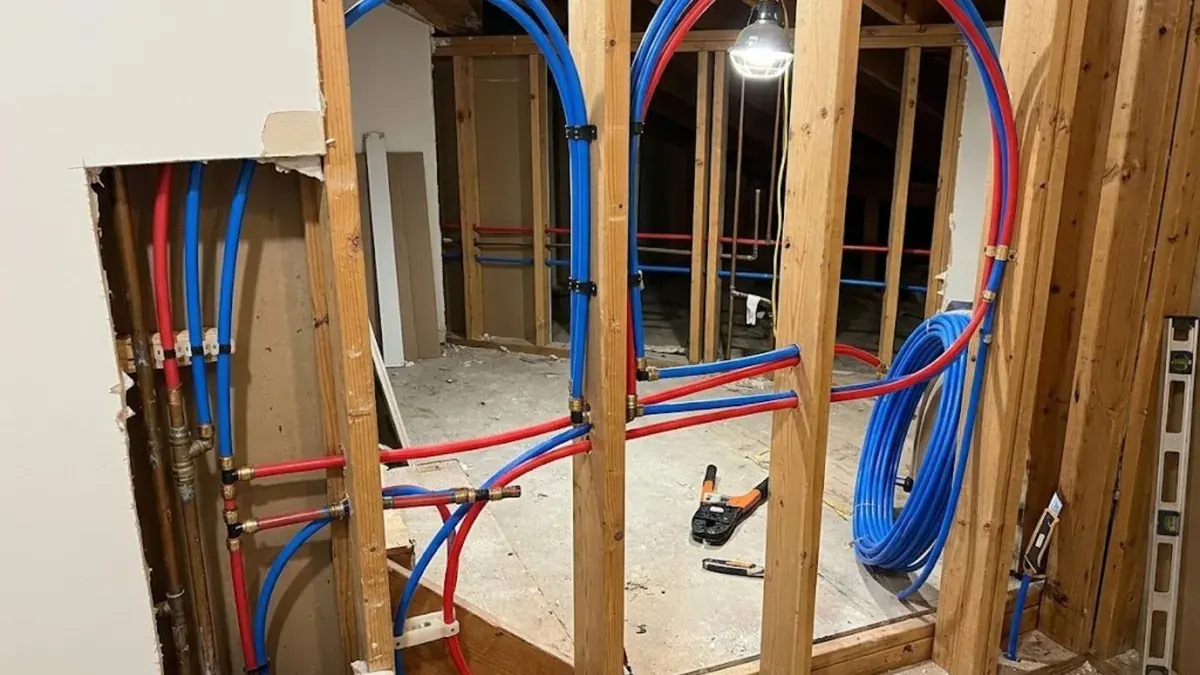
In a house on a pier-and-beam foundation, a plumber crawls underneath and replaces pipe. In a house on a slab, most supply lines are in or under the concrete or in the attic and walls, and that changes how a repipe works. This guide explains the choices for a slab home in Sachse.
Why homeowners repipe
- Repeated pinhole leaks in different places
- Rust-colored or discolored water that returns after flushing
- Low flow at fixtures that was not there before
- A leak under the slab that keeps coming back
- Pipe materials with a known failure history in the house
One leak is a repair. Several leaks in the same system are a sign that the whole pipe is wearing from the inside, and each repair only buys time.
Where supply pipes run in a slab home
In many slab homes, the supply lines were cast in or run just under the concrete. In others, they run through the attic and drop down in the walls to each fixture. Which type you have decides the repipe plan, and a plumber can often tell from the age of the house, the access you see and a quick look at the meter and water heater.
Three ways to repipe a slab house
| Method | What happens | Tradeoff |
|---|---|---|
| Reroute through attic and walls | New lines run overhead and drop to fixtures. Old lines under the slab are capped. | Most common. Needs drywall patches at the drops. |
| Replace in the slab | Concrete is cut and lines are replaced at the same path. | Costly and messy. Used when rerouting is not practical. |
| Section repair | Only the failed section is rerouted. | Lowest cost. Other sections may fail later. |
PEX, copper and CPVC
PEX is flexible, so it runs with fewer joints and fits in walls without opening as much drywall. Copper is rigid and long-lived where the water chemistry suits it. CPVC is another rigid plastic option. A plumber picks the material based on the house, the water and your budget, and should be able to tell you why.
For a deeper look at the process on a Sachse job, see our repiping page.
What a repipe looks like day to day
Walkthrough and plan
The plumber locates each fixture, the heater and the main and plans the new route.
Shutoff and rough-in
The water is shut off, and new lines are run through the attic and into the walls through small openings.
Connect and test
Fixtures are reconnected, the system is pressure tested and the old lines are capped.
Patch
Drywall openings are patched. Painting is usually separate.
Most whole-house repipes in a typical home take a few days, depending on size, and the water is off for part of each day. Ask for the schedule in writing.
Repiping and permits in Sachse
The City of Sachse building department decides which permits and inspections apply to plumbing work. Ask the department before work begins, and ask your plumber to confirm the permit in writing.
To check that a plumber is licensed, use the Texas State Board of Plumbing Examiners license lookup. The City of Sachse main line is 972.495.1212.
Questions to ask before you sign
- Will the work be permitted and inspected?
- What pipe material will be used, and why?
- Where will the new lines run, and which walls will be opened?
- Who patches and paints the drywall?
- What is the warranty on labor and materials?
A clear price in writing, before work starts, is the minimum. Ask for it. Older homes in Garland often raise the same questions, and our Garland page explains how we approach them. Homes in Murphy are newer, so repiping there is less common.
Is a repipe the right call?
Look at the age of the house, how many leaks you have had and where they were. A leak in a slab can sometimes be handled by slab leak repair, but if the same system keeps failing, a repipe becomes the cheaper path. A plumber can help you compare.
Living through a repipe
Plan for the water to be off for part of each working day. Fill a few containers for drinking and flushing, and keep a day or two of dishes simple. Move belongings away from the walls where drops will be opened, and ask where the crew will park and store materials.
After the work is complete, run every fixture for a few minutes to flush debris out of the new lines, and clean the aerators on faucets, since small particles can lodge there. Check under sinks for drips over the first week.
Pinhole leaks again?
Call the 24/7 line and describe the symptoms.
Common questions
Can a slab house be repiped without breaking the concrete?
Often yes. Lines can be rerouted through the attic and walls, and the old lines under the slab are capped.
How long does a repipe take?
Many take a few days for a typical home. Ask your plumber for the schedule before work begins.
Do I need a permit to repipe in Sachse?
Ask the City of Sachse building department. Rules vary by project.
How do I check a plumber is licensed in Texas?
Use the Texas State Board of Plumbing Examiners license lookup.
Will repiping fix low water pressure?
If the pressure loss comes from corroded pipe, yes. If it comes from a valve, regulator or the city supply, a repipe will not help.