
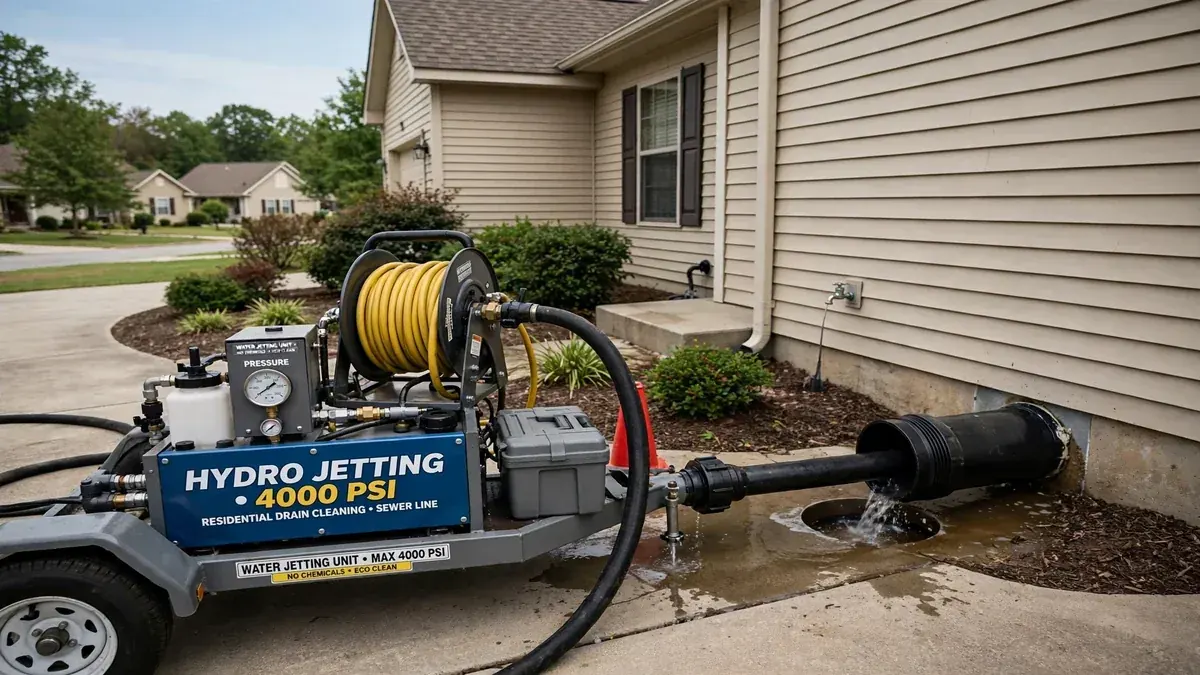
Hydro jetting uses a hose with a special nozzle that sends water out at high pressure in several directions. The jets scour the walls of the pipe, cut grease and scale loose and push debris down the line. It is one of the most effective ways to clean a sewer line, and it raises a fair question for owners of older homes: will it break my pipes?
The answer depends on the condition of the pipe, and the way to find out is to look first.
Why a camera comes before the jet
Old pipe may be cracked, offset, collapsed or sagging. A camera pushed through the line shows which. If the pipe is sound, jetting is safe. If the pipe has a break, water pushed at pressure can wash out the soil around the break and enlarge the problem. A plumber who jets blind is taking a risk with your pipe.
Pipe materials and jetting
| Material | Jetting |
|---|---|
| PVC and ABS | Safe when the pipe is sound |
| Cast iron | Often fine, and scale removal is a common reason to jet |
| Clay | Joints are weak, so pressure is set lower or a cable is preferred |
| Orangeburg or bituminous fiber | Not a good candidate. The pipe can collapse |
| Lined pipe | Check with the lining installer first |
We do not state which materials Sachse homes have, since that depends on the street and the year the house was built. The camera answers it.
Pressure and nozzles
A jetter is not run flat out on every job. The plumber picks a nozzle and sets the pressure to suit the pipe size, its condition and the type of buildup. A forward nozzle pulls the hose through. Rear-facing jets scour the wall. Heavy buildup calls for a slow pass and sometimes a rotating head.
When jetting is the right choice
- Grease buildup in a kitchen or restaurant line
- Scale in an older cast iron drain
- Silt and sludge that a cable does not remove
- Root hair left behind after cutting
- A line that clogs again soon after a cable cleaning
When to skip jetting
- The camera shows a collapsed or crushed section
- The pipe is made of a material that cannot take pressure
- There is a large belly full of standing water that should be repaired first
- The cleanout is missing, which makes a safe setup impossible
In those cases, a cable or a repair comes first. See sewer inspection for how the camera step works and hydro jetting for the full service.
Old pipes in Sachse
Sachse is a city in Dallas County, and homes there span many building years. Ask your plumber to show the camera video before jetting, and ask the City of Sachse building department whether any permit applies to a repair that follows.
Soil in this part of Dallas County is expansive clay, according to the Dallas County Master Gardeners, and shifting soil can offset or crack older pipe. That is another reason to look before pushing pressure through.
Questions to ask before you agree
- Will you run a camera first?
- What pressure and nozzle will you use?
- Do you have the cleanout access you need?
- What happens if the camera shows damage?
- Will I get a video of the line before and after?
Older homes in Garland and Wylie often come with these exact questions, and we answer them on every call.
What to expect on the day
The plumber opens a cleanout, runs the camera and decides on the nozzle and pressure. A short test pass shows how the pipe responds. The main pass follows, with the hose advanced slowly, and the water carries debris to a catch point or out through the main. A second camera run shows the cleaned pipe.
Safety around the equipment
The jet stream can cut skin. Keep children and pets away from the work area and do not touch the hose. Make sure the cleanout is clear before the crew arrives. Keep toilets and sinks closed and unused while the work runs, since pressure can push water or air into a fixture.
A plumber should also protect floors and landscaping where the hose and equipment pass. Ask where the truck will park and how the debris will be handled.
When the job is finished, ask for the before and after video and a note of the pressure used. That record helps if the line ever needs work again, and it shows the pipe was treated with care.
Jetting after a repair
After a spot repair or a lining job, a plumber may jet the line to wash away debris and test the work. The pressure is set low for new work, and the camera confirms the result. This is a good moment to ask for a maintenance note, such as when the line should be checked again.
Want a camera check before jetting?
Call the 24/7 line.
Common questions
Can hydro jetting damage old pipes?
It can damage cracked, collapsed or fragile pipe. A camera check first shows whether it is safe.
Is hydro jetting better than cabling?
Jetting cleans the pipe wall, while a cable punches a hole through a clog. Many jobs use both.
Can I jet a clay sewer line?
Sometimes, at lower pressure and after a camera check.
How do I know what my pipe is made of?
The camera and the age of the house usually tell. We do not guess.
Why check the soil in Sachse?
Expansive clay can move pipe, so look at the line before applying pressure.