
Carbon monoxide, or CO, is a gas made when fuel burns without enough air. It has no smell, no color and no taste. In a home it can come from a gas water heater, a furnace, a stove or a fireplace when something is blocked or poorly vented. It is dangerous because you cannot sense it.
This guide covers the warning signs, where CO can come from in a home with a gas water heater, how detectors work and which parts of the problem a plumber can and cannot help with.
If you think CO is present right now
Get everyone outside
Fresh air first. Do not stop to open windows or switch things off.
Call 911 from outside
Say you suspect carbon monoxide. Emergency crews have meters.
Do not go back in
Wait until responders say the home is clear.
Do not run the appliance again
Leave it off until a licensed professional checks it.
Warning signs
- Headaches, dizziness or nausea that ease when you leave the house
- Several people or pets feeling sick at the same time
- A detector alarm
- Soot or stains around a water heater, furnace or vent
- A pilot that keeps going out, or a yellow or orange flame instead of blue
- Heavy condensation on windows near a fuel appliance
The flu and CO poisoning can feel alike at first. A pattern that clears when you are away from home is the clue.
How a gas water heater can produce CO
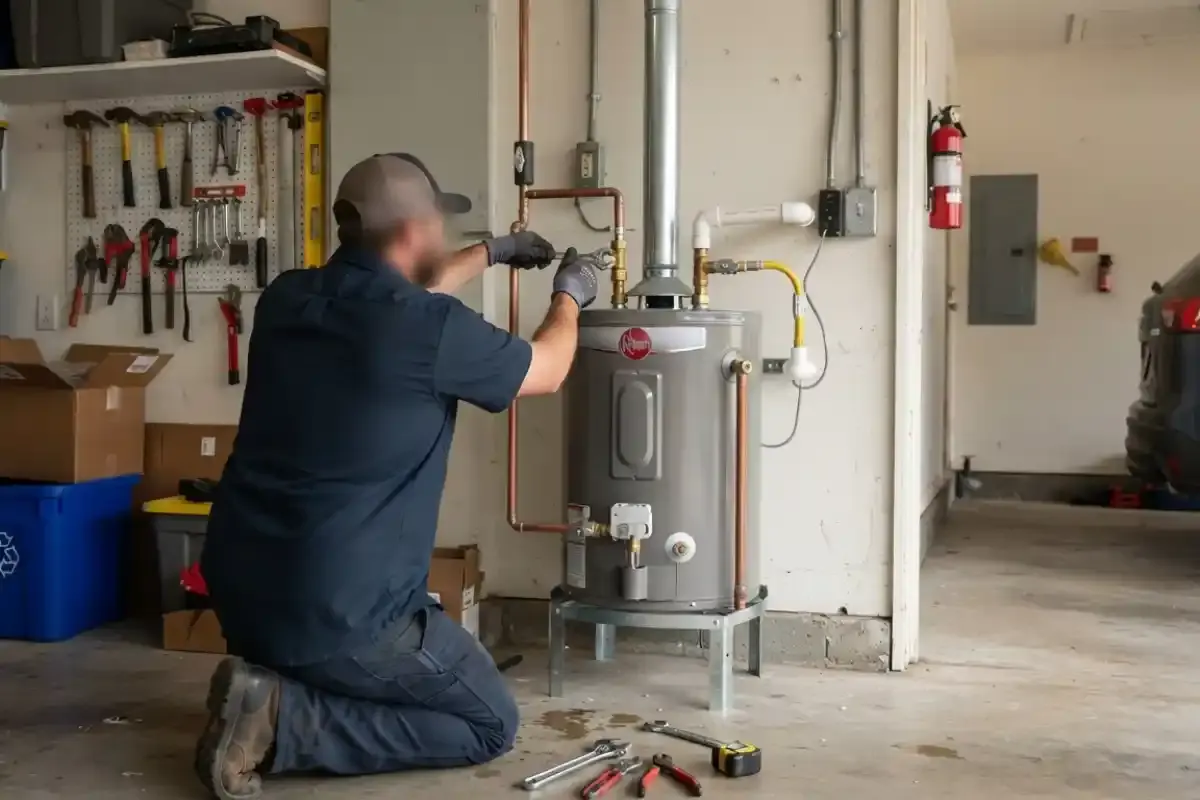
A gas tank heater burns fuel in a chamber at the bottom and sends the exhaust up a flue to the outside. If the flue is blocked, cracked or disconnected, if the room lacks air or if the burner is dirty, exhaust can spill into the room. Back-drafting is the name for this. Other fuel appliances in the same closet can make it worse.
Detectors are the first line of defense
A CO detector gives an alarm before you feel the symptoms. Safety agencies advise placing one on every level of the home and near sleeping areas, and replacing units on the maker schedule, since sensors wear out. Test the alarm monthly and swap batteries when the manufacturer says to.
What a plumber can check
| Item | What the plumber looks at |
|---|---|
| Flue and vent | Connections, slope, damage and a clear path to the outside |
| Combustion air | Whether the room gets enough air for the heater |
| Burner and flame | Color, shape and signs of dirt or soot |
| Draft | Whether exhaust is drawn up the flue and not into the room |
| Age and condition | Rust, cracks and failing safety parts |
A plumber does not replace the fire department or the gas utility. If you smell gas, leave and call the gas utility or 911 from outside. For the heater itself, see water heater repair and water heater installation.
Gas safety in Sachse
For a gas leak or a suspected CO problem, call 911 from outside the home. Ask your gas utility about its own inspection service. The City of Sachse building department can tell you which codes apply when a gas appliance is installed or moved. Ask before work begins and ask for the inspection.
Reducing the risk
- Keep the area around the heater clear of storage and chemicals
- Have fuel appliances inspected on a regular cycle
- Never run a generator, grill or camp stove in a garage or near a window
- Replace a heater that shows soot or a failing flue
- Install detectors and replace them on schedule
Garage heaters in tight closets and shared spaces need extra care. Our crews in Murphy and Wylie see this often in newer homes where the heater sits close to the living space.
Detector placement and care
Place detectors where the maker advises, away from fuel appliances and bathrooms, since steam and fumes can trigger false alarms. Check the date printed on the back of each unit. Most detectors have a limited life, and an expired unit may no longer sense gas. Write the replacement date on the unit when you install it.
After a scare
If an alarm sounded and responders found nothing, do not assume it was false. Ask the responders or a licensed professional to inspect every fuel-burning appliance. Intermittent problems, such as a weather-related back-draft on a windy day, can leave no trace by the time anyone arrives.
When in doubt, treat an alarm as real. Leaving the house costs a few minutes, and staying can cost far more.
Share the detector location and the alarm history with anyone who lives with you, including guests who sleep over.
Other places CO can come from
- A furnace with a cracked heat exchanger or a blocked flue
- A gas stove or oven used for heat
- A fireplace with a closed damper
- A car or generator running in an attached garage
- A charcoal grill used indoors or on a covered porch
Because any of these can produce the gas, a detector protects you regardless of which one fails.
Want your gas heater checked?
Call the 24/7 line and describe the heater and what you noticed.
Common questions
Can a water heater leak carbon monoxide?
A gas water heater can spill exhaust, including CO, if the flue is blocked or damaged or if the room lacks air.
What should I do if my CO alarm goes off?
Get everyone outside, call 911 from outside and do not go back in until responders say it is clear.
Where should CO detectors go?
Safety agencies advise one on every level and near sleeping areas.
Do electric water heaters make CO?
No. Electric heaters do not burn fuel, but other appliances in the home might.
Who checks gas safety in Sachse?
Call 911 for an emergency. For code questions about appliances, ask the City of Sachse building department.